
Views: 0 Author: Site Editor Publish Time: 2026-06-22 Origin: Site


You see sewer grates made from many materials. Cast iron, concrete, and composite materials like fiberglass are the main types. The materials used decide how strong and tough the grates are. Material choice can change the price and how often you fix the grates. Studies show that material affects how long grates last and how much it costs to keep them working. So, you need to think about these things when picking sewer grates.
Sewer grates use cast iron, concrete, and composite materials. Each material has special benefits for different uses. Cast iron grates are very strong and last a long time. They work well in busy places like roads and airports. Concrete grates cost less and do not rust. They are good for quiet places like parks and sidewalks. Composite materials like fiberglass are light and do not corrode. They are easy to put in and take care of. Picking the best material depends on weight needs, price, and weather. This helps the grate last a long time.

Cast iron is used for sewer grates because it has helpful features. It melts at a low temperature, so workers can shape it easily. This lets them make grates with cool designs and strong frames. Cast iron flows well when melted, so you get products that are exact and tough. It is easy to work with, so you can change grates for different jobs. Cast iron does not bend or wear out fast, so grates stay strong even with lots of weight. Some types of cast iron do not rust easily, so they last longer outside.
Cast iron melts at a low temperature.
It flows well when melted.
It is easy to work with.
Cast iron does not bend or wear out fast.
Some types do not rust easily.
Cast iron is strong and lasts a long time. You can count on cast iron grates to handle lots of cars and tough weather. Cast iron can take a lot of pressure, but it can crack if pulled. Ductile cast iron is better at stretching, so it does not break as easily. Cast iron sewer grates can last for many years if put in right. Places that need strong grates often use cast iron for extra support.
Material | Compressive Strength (N/mm²) | Tensile Strength (N/mm²) |
|---|---|---|
Cast Iron | 600 | 150 |
Ductile Iron | N/A | 60,000 - 120,000 PSI |
Stainless Steel | N/A | Impact resistant |
Cast iron trench systems can last for many years. They stay strong even with lots of cars and trucks.
Cast iron sewer grates are used in many places. Airports, sea ports, roads, parking lots, trenches, and fire stations use them. Roads need grates that can hold up cars and trucks. Parking lots and stations use iron grates because they are strong and last a long time. Airports and ports use cast iron grates because they must handle heavy loads and lots of use.
Airports
Sea ports
Roads
Parking lots
Trenches
Fire stations
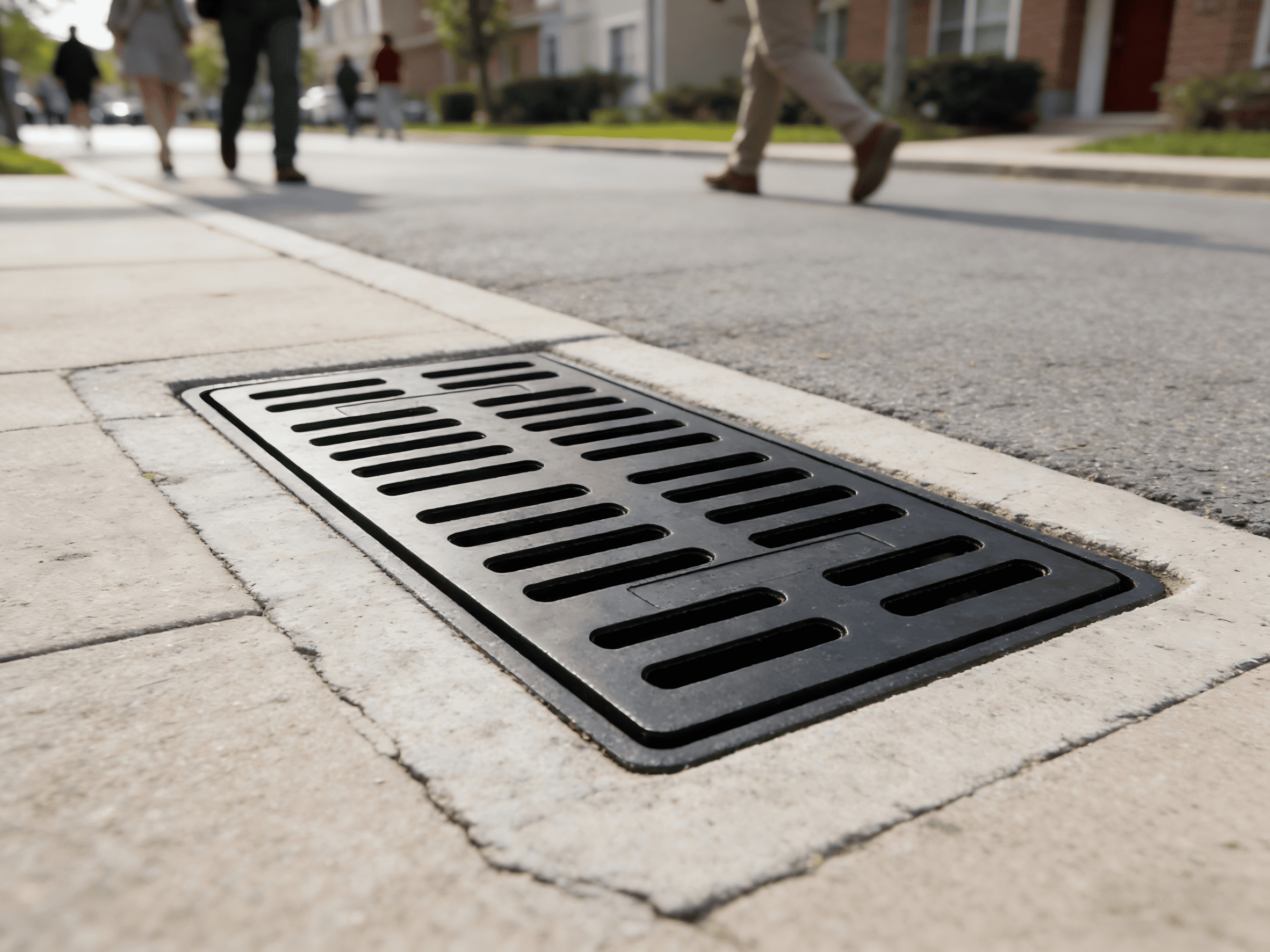
Concrete is used for many manhole covers. It is strong and can hold heavy cars and trucks. Workers can shape concrete before it gets hard. This lets them make grates for different jobs. Concrete does not break down from water or chemicals. You do not have to worry about rust or fast damage.
Here is a table that lists the main features of concrete for manhole covers:
Property | Description |
|---|---|
Compressive Strength | Concrete is strong, so it works well for building manhole covers. |
Resistance to Corrosion | Concrete does not get ruined by chemicals or water, so it lasts longer. |
Workability | You can shape concrete before it gets hard, so you can make covers that fit. |
Durability | Concrete stays strong for a long time, so you do not need to fix it often. |
Concrete manhole covers cost less than cast iron ones. The materials are easy to find, so big projects cost less. Concrete grates last a long time, so you do not need to replace them often. They are heavier than cast iron grates. The weight keeps them in place, but makes them harder to install. You may need special tools to move them. Concrete does not rust, so you spend less money and time fixing them. You do not need to paint or coat them to protect from weather.
Tip: Concrete grates are good if you want something cheap and easy to care for.
Concrete manhole covers are used where traffic is not too heavy. Sidewalks, parks, and neighborhood streets use them. They are also used where theft is a problem. Concrete grates are heavy, so they are hard to steal. Cities use concrete grates for storm drains and utility holes. Concrete is a strong and low-cost choice that lasts for years.
There are different materials for sewer grates. Composite materials include fiberglass, SMC, and resin. These are not metal, but they have many good points. Composite materials are lighter than cast iron or concrete. They do not rust or get damaged by chemicals, so they last longer in hard places.
Characteristic | Description |
|---|---|
Lightweight and Easy to Handle | Composite manhole covers are much lighter than old types. This makes them safer and easier to move. |
Resistance to Corrosion and Chemicals | They do not rust and can handle many chemicals, so they last longer. |
Noise Limit | Composite materials help lower noise from cars, which is better for cities. |
Electric and Thermal Insulation | They stop electric shocks and do not get hot easily. |
Permeability to Electromagnetic Fields | They let more signals pass through than cast iron. This helps with new technology. |
Respect for the Environment | Making them uses less energy and causes less pollution. |
Theft Prevention | Thieves do not want them because they are not worth much. |
Fiberglass is a popular composite material. Fiberglass grates are easy to lift because they are much lighter than cast iron. They are strong like cast iron but easier to move and put in place. Fiberglass grates can last more than 50 years if used normally. They do not rust or get ruined by chemicals, so you do not have to fix them often.
Fiberglass is light, so it is simple to move and put in.
It can last over 50 years if used right, like cast iron and concrete.
Fiberglass is strong, but it may not hold up as well as concrete with very heavy loads.
Material | Weight Comparison | Strength Comparison |
|---|---|---|
Fiberglass | About one-fourth the weight of cast iron | Strong like cast iron |
Cast Iron | Heavier than fiberglass | Can hold very heavy loads |
Concrete | Heavier than fiberglass | Strong but may bend with lots of weight |
SMC and resin grates are other composite types. SMC grates are good for the environment and are light. You do not need big machines to put them in. SMC and resin grates are strong, safe from electricity, and do not get old or break from acids. They last about 20 years. Thieves do not want them because they cannot sell them for scrap. SMC grates cost less than metal ones, so you save money.
SMC and resin grates are lighter than cast iron, so they are easy to move and fix.
They are strong, safe from electricity, and do not get damaged by acids or hits.
Thieves do not want them because they cannot sell them.
They cost less than cast iron grates.
Note: BMC grates can crack where the metal and other parts meet, but SMC grates do not have this problem. SMC grates may not work well in places with very heavy use.
Composite materials need less care than metal or concrete. They do not rust, so you do not need to paint or cover them. They do not get damaged by chemicals or weather, so you fix them less. They last a long time, so they are a good choice for many places.
Composite materials are good where weight, rust, and theft are problems. Cities use them for storm drains, parks, and sidewalks. You see them in places with not too much traffic. They are also used where electric safety is needed, like near power lines. Choose composite materials if you want grates that are easy to put in and last a long time.
It is important to know how sewer grate materials act under pressure. Cast iron is strong and can hold heavy cars on busy roads. Concrete works well where there are fewer cars, but it can crack as time goes by. Composite grates, like fiberglass or SMC, are light and do not rust, but they might not handle big trucks.
Here is a table that shows how these materials compare by load rating:
Load Rating | Minimum Proof Load (lb) | Description |
|---|---|---|
Non-Traffic | Under 2,500 | For areas without vehicle traffic |
Light Duty | 2,500 | Handles some loading, not for traffic areas |
Medium Duty | 16,000 | For traditional loading, less safety margin |
Heavy Duty (H20) | 40,000 | Meets road and highway needs |
Cast iron and carbon steel grates usually have the highest ratings. Concrete and composites are better for lighter jobs.
Think about price and care when picking sewer grate materials. Cast iron and carbon steel cost more at first, but they last a long time and need little care. Concrete costs less, but it can crack and needs fixing. Composite grates are cheaper to put in and do not rust, so you spend less on repairs.
Sewer grates can last from 20 to 100 years, depending on the material and care.
Concrete can crack and break, so you may need to fix it more.
Metal grates like carbon steel can rust, so you might have to repair or replace them.
Composites need less care and do not rust, which saves money.
In the U.S., most money for wastewater goes to operation and maintenance. Picking the right material can help lower these costs.
Match the material to where you will use the grate. Here are steps to help you choose:
Check the load. Use cast iron or carbon steel for roads and highways.
Look at the area. Pick composites for places with chemicals or where theft is a problem.
Think about price. Use concrete for parks or sidewalks with light traffic.
Consider looks and safety. Choose a grate that fits the place and keeps people safe.
Different sewer grate materials have their own strengths. Cast iron and carbon steel are best for heavy traffic. Concrete works well in places with less traffic. Composites are light and do not rust, so they are good for special needs.
Material Type | Carbon Emissions | Water Quality Impact | Resource Depletion | Manufacturing Emissions |
|---|---|---|---|---|
Concrete | Higher | Alkaline leaching | Hard to recycle | High |
Cast Iron | Lower (recycled) | Minimal | Recyclable | Medium |
Composite | Varies | Depends | Some recycling | Varies |
Tip: Always check the load rating and local rules before you pick a material for your project.
When picking sewer grates, you find three main materials. Cast iron, concrete, and composites are the choices. Each one has its own good points.
Ductile iron is tough and can take hits.
Composite covers do not rust, block sunlight, last a long time, and need little care.
Cast iron is cheaper at first but needs more fixing later.
Pick the material that fits your project best. Think about how much weight it must hold, how much it costs, and how much work you want to do later. Many cities now want materials that help the planet.
You use sewer grates to keep large objects and trash out of the sewer system. These grates let water flow into drains while blocking debris that could cause clogs or flooding.
You look at the location, traffic load, and risk of theft. For busy roads, you pick strong materials. For parks or sidewalks, you may choose lighter or less expensive options.
Yes, some sewer grates can rust or crack. Cast iron may rust over time. Concrete can crack if hit hard. Composite grates resist rust and last longer in wet or chemical-heavy places.
You should check them at least once a year. Regular checks help you find damage, blockages, or missing parts. This keeps the drainage system working well and prevents accidents.


