
Views: 0 Author: Site Editor Publish Time: 2026-08-27 Origin: Site


Moving dirt, freezing weather, and packed soil can easily break uncovered parts in your buried watering system. Picking the Right Valve Box shields delicate utility parts from hard hits and gathered water. A tough underground valve box keeps providing easy entry for regular checkups.
Choosing the Right Valve Box cover is very important for the whole plan of any yard project. Swapping out a normal sprinkler valve costs $75 to $215, but digging up large areas drives total replacement costs up to $250 to $600. Property owners and repair workers must check box sizes, material weight limits, strong lids, and bottom setup steps. Finding the Right Valve Box stops expensive fixes and keeps your whole system working great.
Pick the correct box size so you have plenty of space to fix valves easily.
Pick strong concrete or cast iron boxes to protect driveways from damage caused by heavy vehicles.
Use gel-filled wire connectors to keep water out and prevent electrical short circuits.
Put small gravel under your box to help water drain and keep it from sinking.
Picking the correct valve box size saves you from major repair troubles with your buried utility lines. Many system designers make the mistake of squeezing underground parts into tiny boxes. Squeezing too many mechanical parts together limits movement, wears parts out faster, and makes simple checkups very hard to do.
You should pick box sizes based on how much real space your equipment needs. Industry rules suggest putting no more than three or four valves in one box to keep pipes lined up right. Packing too many parts together puts heavy stress on underground pipe joints when dirt moves. You also need to leave at least a 2-inch gap around manifolds and sprinkler valves. This extra space gives your hands and tools enough room to work during quick repairs.
Picking a box with enough room creates a clean entry point for future maintenance checks. Professional guides give clear size suggestions based on how many valves you have:
Box type | Recommended valve capacity | Notes |
|---|---|---|
Standard rectangular (12 x 17) | 2–4 valves | Works great for most normal house setups |
Jumbo rectangular (15 x 22) | 2–4 valves | Gives extra room for bigger pipes, but not for more valves |
Valve Box Base | 4 L-series valves | Made specifically for house setups with multiple valves |
Best-practice limit | 4 valves per box | Keeps valves easy to fix; do not squeeze in any extra |
Stuffing too many watering parts into one box makes fixing things very difficult later. You need enough room to turn manual bleed screws, change electric solenoids, or replace full parts without digging up your lawn.
Using jumbo valve boxes gives you necessary working space for complicated utility connections. You can protect complex manifold setups while leaving extra room for adding parts later. A large valve box gives repair workers plenty of space to use heavy pipe wrenches easily.
You must make sure your protective box stays big enough so valves do not push against the inside walls. Standard commercial jumbo models have exact size measurements built for heavy-duty jobs:
Specification | Value |
|---|---|
Length | 15 inches |
Width | 22 inches |
Depth (height) | 12 inches |
Max pipe size | Up to 3 inches in diameter |
Valve capacity | Room for 8 valves with custom manifold |
Recommended use | Multi-valve manifolds and professional/complex irrigation installations |
These large commercial boxes can hold main water pipes up to 3 inches wide. Getting the right valve box protects key pipe connections from heavy side soil pressure. Plenty of inside room lets pipes enter cleanly through pre-made slots without bending sharply. Buying extra space today makes fixing your system simple and upgrading it easy in the future.

You must match enclosure materials directly to your local surface weight demands. Heavy lawnmowers, foot traffic, and motor vehicles exert intense downward pressure on subterranean components. Selecting the right valve box material prevents enclosure collapse, structural cracking, and unexpected service disruptions across your utility infrastructure. Taking time to analyze your surface environment ensures total protection for subterranean fittings.
Plastic enclosures provide excellent protection in low-impact soil conditions. Manufacturers craft these units from high-density polyethylene or durable polypropylene materials. These lightweight housings resist chemical corrosion, moisture rot, and soil movement effortlessly over time. Furthermore, ultraviolet inhibitors prevent plastic degradation from direct sunlight exposure along ground lids.
You should install plastic models exclusively inside soft landscape environments. Pedestrian walkways, home gardens, and grass turf areas handle light surface weight safely. An entry-level underground valve box handles standard foot traffic and residential riding mowers easily. These light-duty housings keep installation simple for landscape contractors and homeowners alike. Proper material choice guarantees long-lasting protection without requiring unnecessary spending.
Rating | Typical installation area | Design load | Test load |
|---|---|---|---|
Light duty | Pedestrian-only area or greenbelt/lawn | ~300 lb/ft | ~3,000 lb |
Light-duty plastic housings feature snap-in lids or simple twist locks. These covers prevent soil intrusion while allowing easy worker entry during maintenance checks. However, you must avoid placing light plastic housings near driveways or vehicle parking areas. Heavy vehicular weight crushes soft plastic sidewalls and snaps unsupported top covers quickly. Installing inappropriate plastic enclosures in vehicular paths creates serious hazard risks for passersby and subsurface pipe networks.
Vehicular zones demand extreme physical strength from every installed valve box. Driveways, commercial parking lots, and city streets require specialized polymer concrete or heavy cast iron materials. Polymer concrete combines aggregate materials with resin matrix binders to resist intense crushing forces and freeze-thaw weather shifts. These resilient heavy-duty structures absorb heavy surface impacts while maintaining structural integrity for decades. Heavy-duty polymer concrete and cast iron options shield each valve box from severe road vibrations.
You must choose enclosures based on established industry load standards. Standard ANSI/SCTE 77 rating classifications evaluate physical load capabilities under strict testing procedures:
Rating | Typical installation area | Design load | Test load |
|---|---|---|---|
Tier 5 | Sidewalk with non-deliberate vehicular traffic safety factor | 5,000 lb | 7,500 lb |
Tier 8 | Sidewalk with non-deliberate vehicular traffic safety factor | 8,000 lb | 12,000 lb |
Tier 15 | Driveway/parking lot/off-roadway; occasional non-deliberate heavy vehicular traffic | 15,000 lb | 22,500 lb |
Tier 22 | Driveway/parking lot/off-roadway; occasional non-deliberate heavy vehicular traffic | 22,500 lb | 33,750 lb |
AASHTO H-20 | Continuous roadway/deliberate vehicular traffic | 16,000 lb wheel; 32,000 lb axle | 34,720 lb |
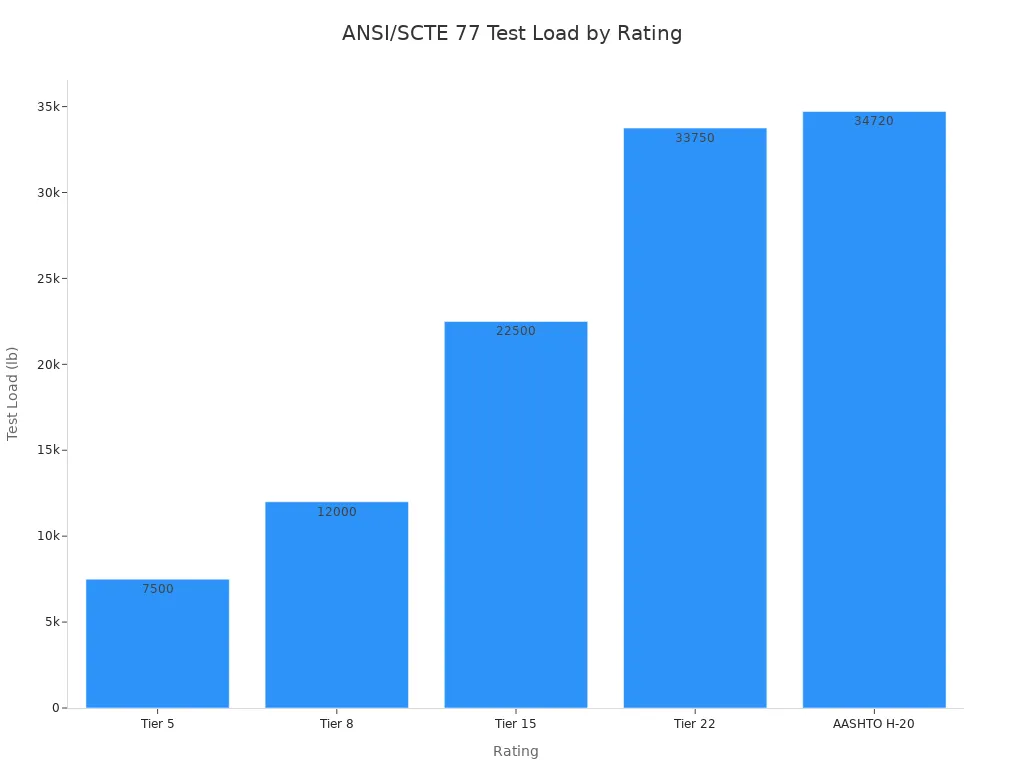
Tier 5 and Tier 8 units protect sidewalk areas when cars run over them by mistake. Tier 15 and Tier 22 boxes defend driveways and lots from automobiles and large delivery trucks. You need to put tough AASHTO H-20 rated cast iron assemblies right into active streets. These strong housings handle constant wheel hits over 16,000 pounds without moving out of place. Cast iron covers stop surface scrape damage without wearing out or bending during temperature changes. Picking heavy-duty options protects your inner pipe setup against tough driving conditions for a long time.
You need to protect electrical control wire connections inside an underground valve box. Over time, rain easily leaks into these non-waterproof covers. Water gets pulled straight inside regular twist-on wire connectors. Rust ruins bare copper wires very fast. Avoid normal wire connectors in wet spots to stop power loss.
Protect your system wires by choosing gel-filled or silicone-filled direct-burial connectors. Waterproof wire connectors block water and air completely. Pre-filled gel shields each bare wire tip without using special tools. This tight seal prevents short circuits at every entry point. Built-in side cutouts in the valve box allow smooth pipe entry without weakening box walls.
Proper valve box setup requires a solid base underneath your underground pipes. First, dig your hole deep enough to fit the entire box height. Cover the bottom dirt with strong landscape fabric to block weeds and bugs. Spread a clean 3-to-4-inch layer of pea gravel right on top of the fabric. This gravel layer drains water fast and keeps valve parts out of thick mud.
Installing a valve box correctly keeps the top cover flat with the surrounding grass. Wide outer rims anchor the valve box firmly so dirt movement cannot shift it. Accurate setup prevents dangerous trip spots on your lawn or garden paths. Fill the outer spaces around the walls carefully using loose soil. The table below shows simple steps for setting up a flush valve box lid:
Installation step | Recommended practice for a flush lid |
|---|---|
Hole excavation | Dig deep enough to accommodate the gravel layer and box height |
Drainage base | Add clean pea gravel and level the unit evenly |
Grade alignment | Position the top lid flush with surrounding soil, turf, or hardscape |
Wall backfilling | Pack loose soil without heavy rocks around outer sidewalls |
Protecting buried utility lines takes three main steps. You need to pick the right box size for inside space, choose strong materials for surface weight, and install deep gravel bases. Picking the right valve box protects delicate solenoids from breaking. This simple choice saves you from costly yard digging repairs later on.
Setting up sturdy boxes shields your water pipes from heavy weight and bad weather.
You keep your underground valves easy to reach for routine checkups year after year. Always measure your entire valve layout before buying any new box enclosure. Getting exact numbers ensures a perfect fit for your yard.
Put no more than four valves in one box. Squeezing too many parts inside limits your room to make fixes. Leave a 2-inch gap around valves so tools fit easily.
Buried boxes collect water over time. Basic wire nuts let moisture in, rusting copper wires and blowing electrical shorts. Gel connectors seal your wiring tight to stop water harm.
Dig the hole deep for a pea gravel base. Put down landscape cloth to block rising dirt. Set the box on gravel so the lid stays level with the grass.
Driveways and parking spaces need extra strong boxes. You should choose Tier 15, Tier 22, or AASHTO H-20 rated models. These concrete or iron units hold heavy cars without cracking.


