
Views: 0 Author: Site Editor Publish Time: 2026-11-16 Origin: Site


Protect the steps with padding and a moisture barrier. Secure every load so it cannot shift. Store them dry, with edge protection and stacking limits. These three habits protect your investment from the factory to the trench.
Packaging sets the foundation. You cushion the coating and block moisture before the bundle leaves the yard. Transport keeps that protection intact. Proper blocking and strapping stop bundles from sliding or crushing. Storage preserves the steps until installation day. A dry, well-stacked site prevents warping and coating damage.
The steel core carries the load. The PP coating keeps corrosion out. Any breach during handling becomes a real cost. This guide gives you step-by-step, cost-effective methods for manhole step packaging you can apply today.
Wrap each step with padding and a moisture barrier to keep the coating safe.
Tie the bundles down firmly during transport so they don't shift and get damaged.
Keep the steps in a dry, covered place off the ground, and do not stack more than the limit allows.
Check the bundles often for rips, dents, or loose straps, and fix any problems right away.
Teach all workers the right steps so you avoid expensive rework and claims.
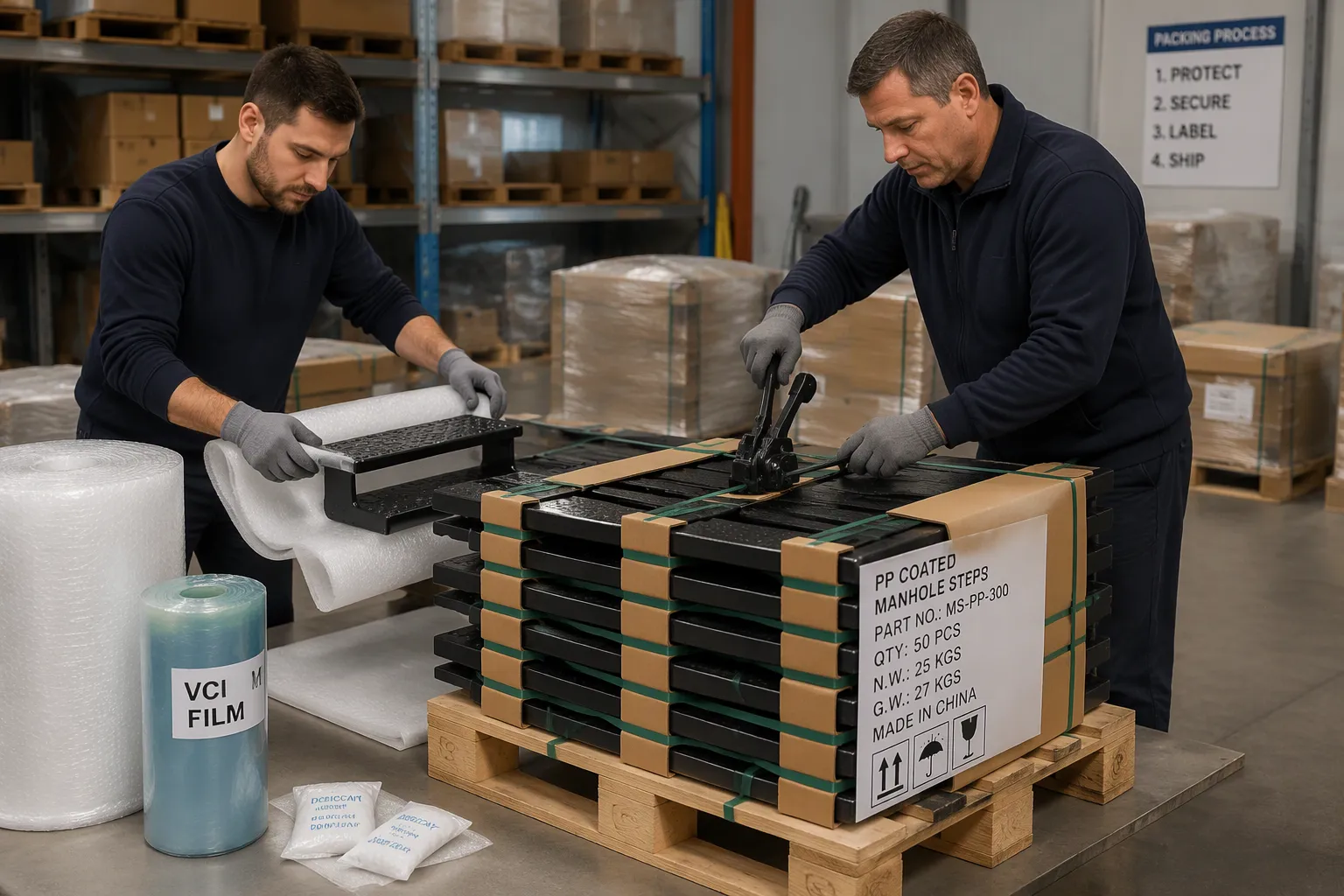
A PP-coated manhole step has two parts. A steel bar core carries the load. A polypropylene coating provides corrosion protection. The coating should fully encapsulate the step. It should also be free from projections and sharp edges. Any gap or nick in that skin lets moisture reach the steel.
The name "PP-coated manhole step" describes only the outside. When you compare bulk quotes, fix the material and core specification first. Ask for the core diameter, the steel grade, and the coating thickness in writing. Then match your packaging to both layers. Good manhole step packaging protects the coating from abrasion and the core from bending.
You have several material options. Each one fits a different job:
Padding: Foam sheets, bubble wrap, or corrugated pads cushion the coating against rub marks. Use them between steps and at bundle ends.
Moisture barriers: VCI film or desiccant packs inside a sealed liner block condensation during long trips and damp storage.
Edge protectors: Plastic or fiberboard angles guard step ends and threads from impact.
Strapping: PET or steel banding holds bundles tight. Use corner boards under the strap so it does not cut the padding.
Follow this sequence for consistent, repeatable bundles:
Inspect each step. Reject any unit with a cut, blister, or exposed steel.
Wrap the step in padding. Overlap the ends by a generous margin.
Add edge protectors to both ends.
Group steps into a bundle. Keep the count fixed per bundle so handlers can verify loads at a glance.
Wrap the bundle in the moisture barrier. Add desiccant where humidity is high.
Strap the bundle. Place straps over the corner boards, not directly on the coating.
Label the bundle. Show the part number, quantity, coating type, and handling symbols.
Labeling deserves real attention. A clear label tells the receiver what is inside and how to lift it. Print "do not drop" and "keep dry" in plain words. Add the bundle weight. Handlers make faster, safer choices when the label answers their questions.
Keep the packing area clean and dry. Grit trapped under padding acts like sandpaper on the coating. Train your team on one written procedure. Consistent manhole step packaging reduces claims and speeds up unloading at every site.
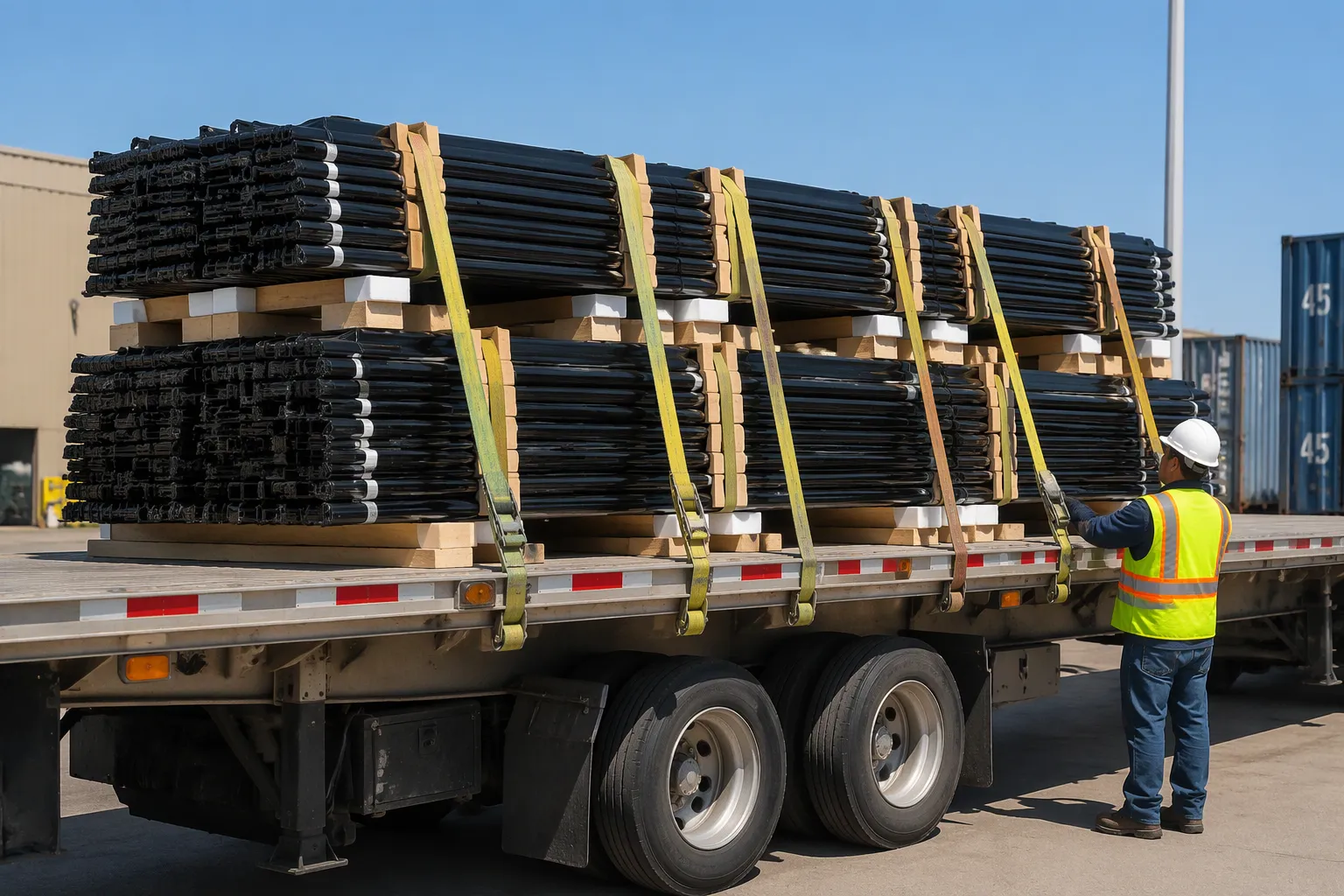
Good manhole step packaging only works if the load stays put. Plan the load before the first bundle moves. Distribute weight evenly across the trailer deck. Keep heavy bundles low and centered over the axles. Place lighter bundles on top. Check the trailer floor for nails, grit, and broken boards. Loose debris grinds against padding and wears through to the coating.
Block and brace every bundle. Use wood dunnage or foam blocks against the bundle faces. Nail or clamp the blocking to the deck where the carrier allows it. The goal is simple: no forward, backward, or sideways movement. Recheck the blocking after the first few miles. Straps settle, and a loose bundle shifts fast.
Strap placement matters as much as strap tension. Run straps over the corner boards you installed during packing. Space them evenly along the bundle length. Never strap directly across bare coating. A tight strap on unprotected PP will crush or crease the skin.
Plan the route with weather in mind. An open flatbed in rain needs a tarp and a sealed liner. A dry day still needs airflow, so do not seal a damp bundle inside plastic.
Think about the ends. Steps go into preformed holes later with a minimum 3-inch embedment. A bent or dented end will not seat cleanly in that hole. Poor handling today becomes a call-back tomorrow. Protect the ends with edge protectors and keep bundles from resting on their tips.
Each shipping mode fits a different job:
Mode | Best fit | Watch for |
|---|---|---|
Flatbed | Full bundles, short and regional hauls | Weather exposure; tarp the load |
Enclosed van | Mixed orders, high-value or damp-climate deliveries | Load bars and floor blocking |
Container | Export volumes, long ocean transit | Desiccant, VCI liner, tight bracing |
Unloading is where most coating damage happens. Lift bundles with slings or a spreader bar. Do not drag them across the deck. Do not drop them from the tailgate. Set bundles on clean dunnage, never directly on gravel or mud. Inspect each bundle as it comes off the truck. Photograph any crushed corner or torn wrap before you sign the delivery receipt.
Move bundles to the storage area with a pallet jack or forklift. Keep the forks under the bundle, not against the coating. Open bundles only when the crew is ready to install. Cut straps with a shielded knife and pull them away from the steps.
At the site, hand steps out one at a time. Carry them vertically or flat with support at both ends. Stack nothing on top of an open bundle. A bent step wastes the packing effort and delays the crew.
Keep a simple damage log. Note the bundle ID, the damage type, and the action taken. This record shows where handling breaks down and guides training.
Train every handler on these steps. A short briefing before each delivery protects the coating and keeps the job on schedule.
Keep your storage area dry, covered, and off the ground. Set bundles on dunnage or pallets so air moves underneath. Standing water and damp concrete floors drive moisture into the wrap. Store bundles away from direct sunlight and heat sources. UV exposure degrades the PP coating over long periods.
Respect stacking limits. Keep stacks low and stable, and never crush the bottom bundle under excess weight. Place the heaviest bundles at the base. Keep stacks vertical and square so steps do not bow. A step that bows in storage may not sit straight in its hole later. Rotate stock on a first-in, first-out basis. Older bundles leave first, so nothing sits for years.
Inspect stored bundles on a fixed schedule. Check the wrap for tears, the straps for slack, and the ends for dents. Open one bundle per lot and look for coating cuts or exposed steel. Log every finding with the bundle ID and the date. Repair minor wrap damage with fresh film and tape. Move any wet bundle to a dry area and re-wrap it.
These habits matter because of what comes next. Crews drive steps into concrete cured to at least 3,000 PSI with a 6–10 lb. sledge hammer. They set each step with epoxy or non-shrink grout and space them no more than 16 inches center to center. A straight step with an intact coating seats cleanly and holds. Good manhole step packaging keeps every unit at that standard until the crew opens the bundle.
Elite New Materials brings over 20 years of building materials experience to this work. The company supplies SMC composite molded manhole covers for infrastructure, communications, and water treatment projects. These related access products pair well with proper step storage and handling practices.
Pack each step with padding and a moisture barrier. Secure every bundle against shifting during transport. Store the steps dry, off the ground, and within stacking limits.
One habit ties all three stages together: protect the PP coating. That coating is the barrier against corrosion. A cut or crease exposes the steel core, and the damage shows up years later as rust.
Write these practices into a single checklist. Cover packing, loading, and storage in plain steps. Train every handler on that checklist before the first bundle moves. A short briefing now saves rework, claims, and call-backs later.
No. The steel bar core carries the load. The polypropylene coating only keeps corrosion out. Treat the coating as a protective skin, not a structural layer. Fix the core diameter and steel grade in your purchase specification, then protect both layers during handling.
Move the bundle to a dry area right away. Re-wrap it with fresh film and add desiccant if humidity is high. Inspect the steps inside for condensation or coating damage. Log the bundle ID and the date. A small tear left open lets moisture reach the steel core.
You can, with conditions. Set bundles on dunnage so air moves underneath. Cover them to block rain and direct sunlight. UV exposure degrades the PP coating over long periods. Check the wrap and straps on a fixed schedule. Move any wet bundle indoors and re-wrap it.
Inspect each bundle as it comes off the truck. Look for crushed corners, torn wrap, and slack straps. Photograph any damage before you sign. Note the bundle ID and the damage type in your log. This record shows where handling breaks down and guides future training.
Crews drive each step into a preformed hole with a minimum 3-inch embedment. A bent or dented end will not seat cleanly in that hole. Protect the ends with edge protectors during packing. Never rest bundles on their tips. Keep stacks vertical and square so steps do not bow.


