
Views: 0 Author: Site Editor Publish Time: 2026-09-27 Origin: Site


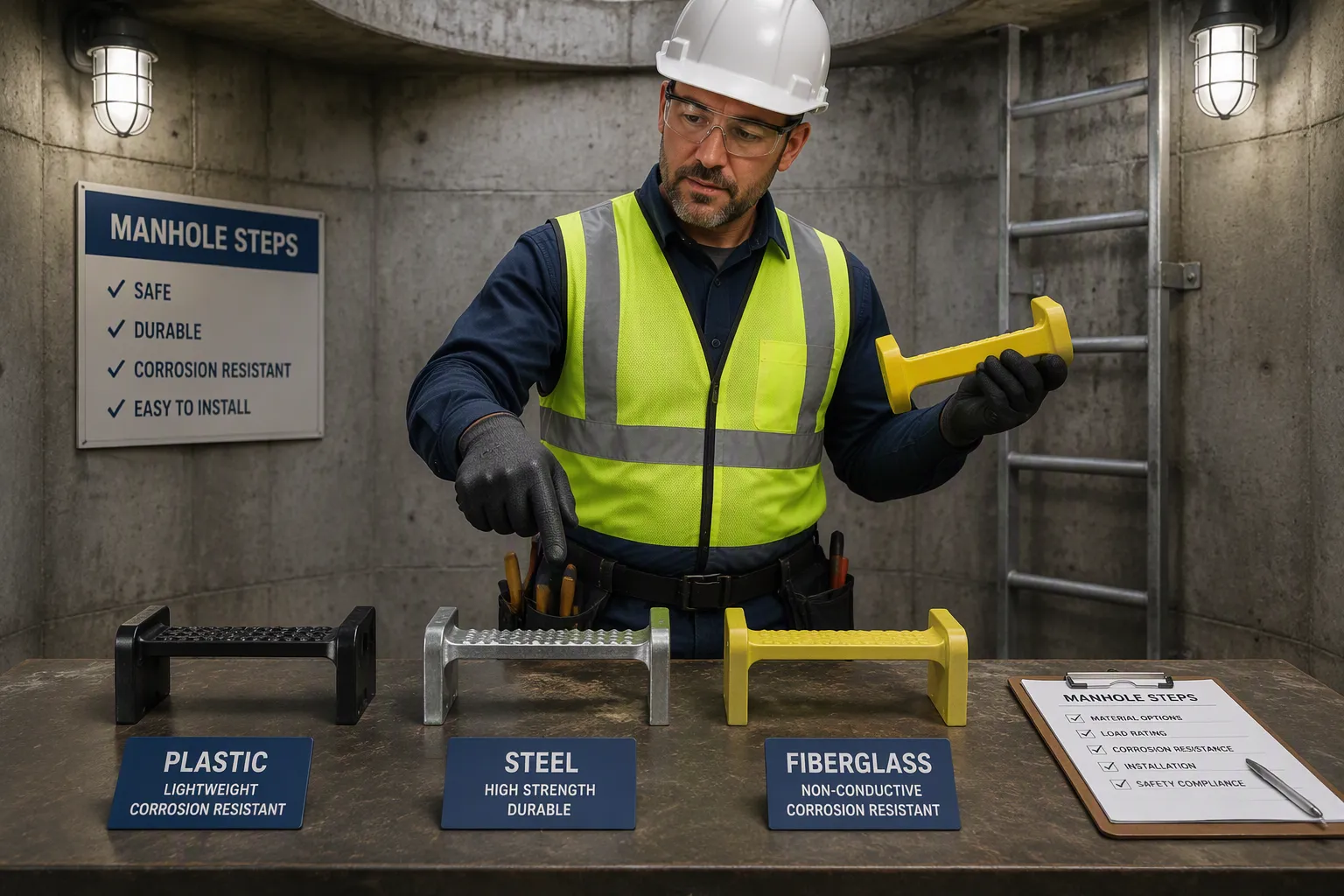
How to Choose Manhole Steps depends on three things: the chamber environment, the load it must carry, and material compatibility. A sewer chamber covers steps in hydrogen sulfide and living organisms. A stormwater chamber switches between wet and dry. A utility chamber often stays dry but may hold chemical vapors.
Concrete, plastic, cast iron, and coated metals each fit different conditions. How to Choose Manhole Steps means choosing the wrong one, and you risk early corrosion, slip dangers, failed pull-out tests, and costly re-entry to replace steps. You also risk the safety of every worker who climbs down. Manhole covers hide these problems until an inspection finds them. Treat every manhole as its own case.
Choose step material that matches the chamber environment to stop early corrosion from chemicals or moisture.
Plastic or PVC-coated steps hold up best against sewer acid; cast iron breaks down quickly in wet conditions.
Each step must hold at least 200 pounds according to OSHA rules; check the manufacturer's test reports.
Pick bolt-on or clip-on steps so they are easy to swap out and cost less over time.
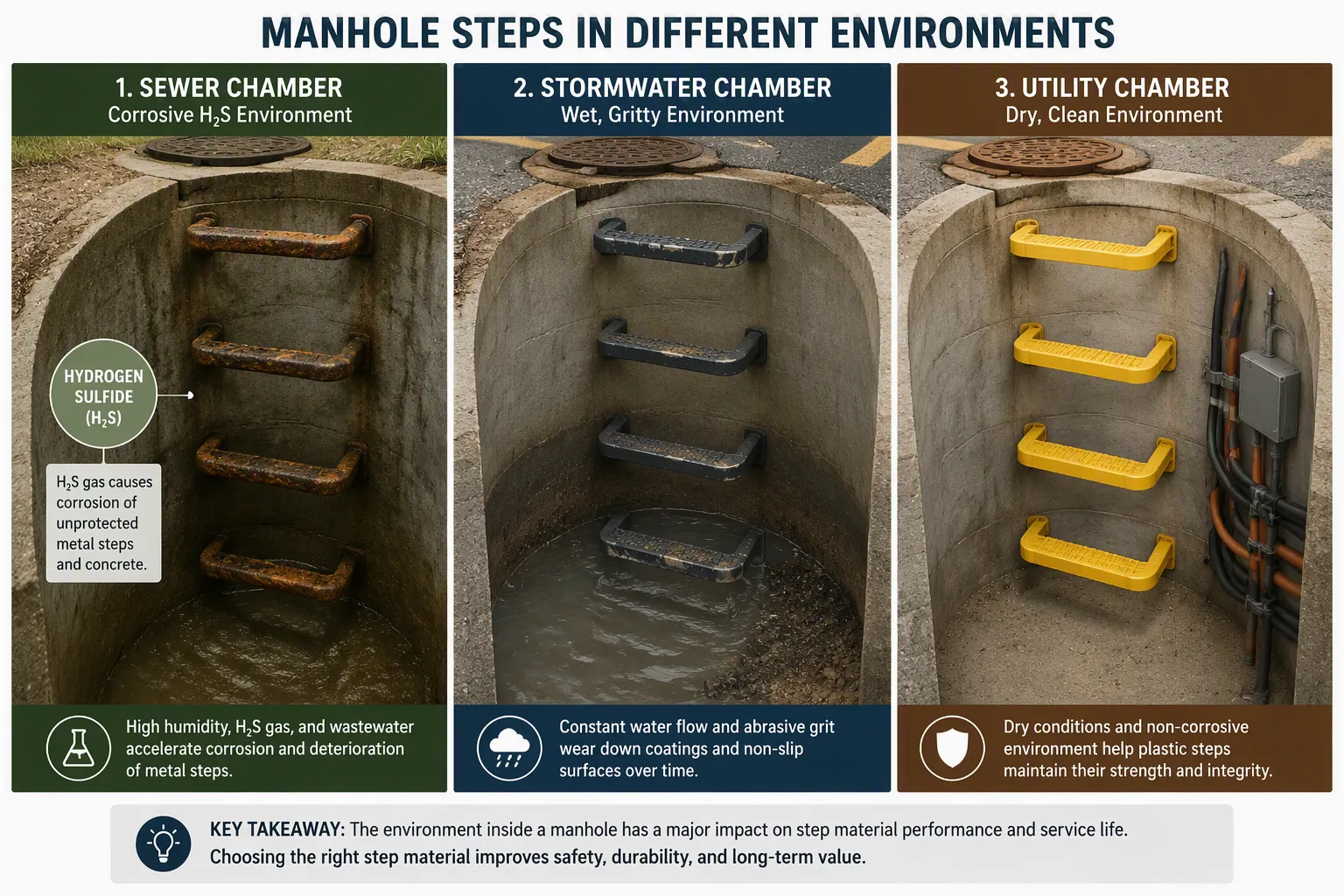
The chamber environment guides every choice you make about step selection. You cannot treat a sewer manhole the same way you treat a dry utility vault. Each setting puts steps in contact with different chemicals, moisture levels, and physical wear. Knowing these differences is the first step in how to choose manhole steps that last.
Sewer chambers make the harshest conditions for any step material. Hydrogen sulfide levels from 0.1 to over 50 ppm show up in city sewer systems, and pH readings can fall as low as 2. This acidic setting eats through unprotected steel fast. In city sewer manholes, H2S levels have been reported to hit peak concentrations of 800 ppm each morning, especially in manholes near a force main discharge. These morning peaks line up with higher flow rates and warmer temperatures, which speed up biological activity.
Biological activity makes the problem worse. Bacteria turn sulfate into H2S, and that gas reacts with moisture to form sulfuric acid. The acid attacks metal steps from the surface inward. You will see pitting, thinning, and eventual structural failure. Plastic steps and coated metal steps stand up to this attack far better than bare steel or cast iron. For any sewer chamber with known H2S issues, specify steps with proven chemical resistance.
Stormwater chambers face a different set of challenges. These structures switch between wet and dry conditions as rain events fill and drain the system. Grit, sand, and debris wash through during storms and scrape step surfaces. That scraping wears down non-slip treads over time. You need steps with hard, durable tread patterns that resist grinding from sediment.
Utility chambers often stay drier, but they may carry chemical vapors from nearby industrial processes or electrical equipment. These vapors can attack certain coatings and plastics. Check the specific chemicals present before you select a material. A step that works well in a drainage chamber may fail in a utility vault with solvent vapors.
Chamber depth also shapes your choice. Deeper chambers require more steps and longer climb distances. Each step must carry the same load rating regardless of depth. Deep chambers favor plastic or coated metal steps because replacement costs rise sharply with depth. Pulling a corroded step from a deep manhole means confined space entry, specialized equipment, and hours of labor. You want materials that survive decades, not years.
The environment sets your material shortlist. Sewer chambers demand chemical resistance. Stormwater chambers demand abrasion resistance. Utility chambers demand vapor compatibility. Match your step choice to the specific threats in each chamber, and you avoid premature failure.
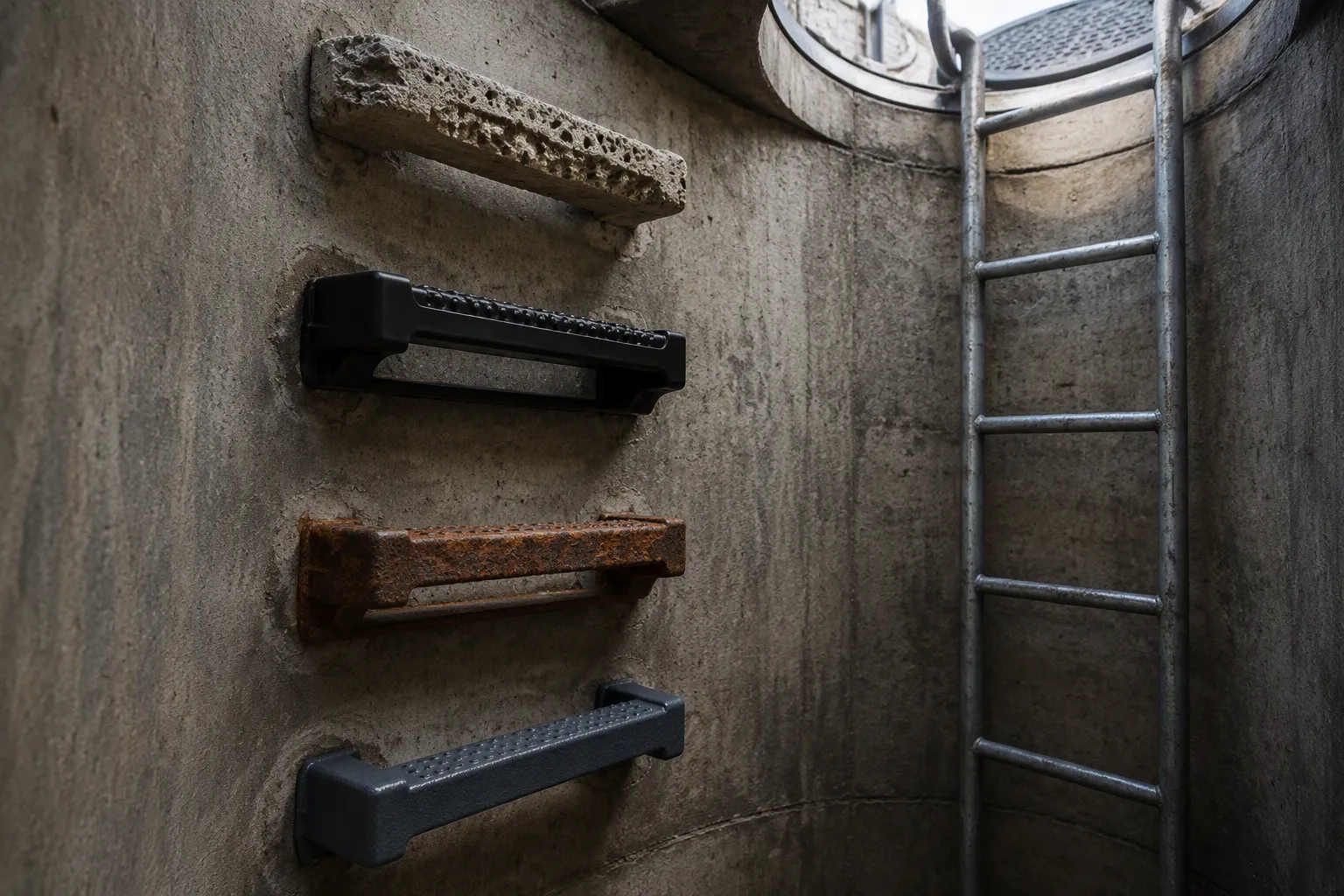
The material you pick decides how long manhole steps last and how safe they stay for workers who climb them. Each material gives you different results in corrosion resistance and load capacity. Coatings add a layer of protection for steel steps in harsh environments. When you think about how to choose manhole steps, material selection becomes the most important choice you will make.
Concrete steps show up in older chambers beneath traditional manhole covers. They handle compression loads well but break down fast in acidic conditions. The porous surface soaks up moisture and chemicals, which leads to spalling and structural weakness over time. The heavy weight of concrete steps makes them hard to handle during installation.
Plastic steps fix many of the problems found with concrete and metal. Materials like polypropylene and nylon resist H2S attack completely. They do not rust, corrode, or conduct electricity. This makes plastic steps perfect for sewer manholes and utility chambers where chemical exposure creates long-term risk. Plastic steps weigh less than metal options, which makes handling easier and cuts shipping costs. The trade-off involves load capacity. Some plastic steps carry lower load ratings than metal counterparts. You must check the manufacturer's test data against the load standard enforced in your area.
Cast iron steps give you high load capacity and traditional mechanical strength. They work well in dry chambers where corrosion stays low. In wet environments or chambers carrying H2S, cast iron corrodes. The surface develops rust and pitting that weakens the step and creates dangerous slip hazards for climbers. Galvanic corrosion makes this problem worse when you mix cast iron with other metals inside the same manhole. If you bolt a stainless steel bracket to a cast iron step in a wet chamber, the cast iron corrodes faster because it acts as the more active metal in the electrochemical pair. This reaction speeds up step failure and raises replacement costs.
Stainless steel steps offer excellent corrosion resistance, especially in chloride-rich environments like coastal areas. They cost more than other options but last longer in harsh conditions. Fiberglass steps combine corrosion resistance with non-conductive properties. They work well where chemical vapors attack metal surfaces or where electrical safety matters.
Coatings extend the useful life of steel steps in wet or chemically harsh environments. Hot-dip galvanizing applies a zinc layer that protects steel through sacrificial action. When the coating scratches, the zinc corrodes first, keeping the steel underneath intact. Hot-dip galvanizing remains one of the most cost-effective coating methods for steel steps. This protection works well in manholes with moderate corrosion risk. In high H2S environments, the zinc layer gets used up faster. Once the zinc depletes, the steel core begins to corrode. You see coated steel steps fail from the inside out when the coating wears thin.
Epoxy coatings create a chemical-resistant barrier bonded directly to the steel surface. Two-part epoxy systems resist acids, alkalis, and solvents common in industrial settings. The coating must stay completely intact for full protection. Any scratch or chip creates an entry point for corrosion to start beneath the coating. Epoxy coatings provide a smooth finish that resists biological growth.
PVC coatings provide the most complete protection. They fully encapsulate the steel core within a thick plastic layer. The PVC shields against H2S attack, moisture penetration, and abrasion from sediment flow. This coating system works reliably in the harshest manholes and stormwater chambers.
You must match the coating to the specific threat level in your manhole. Inspect manhole covers and chamber entry points for signs of coating damage during maintenance. Watch for blisters, cracks, peeling, or scratches. Replace steps as soon as coating damage appears to prevent worker injury or step failure.
The step profile and tread design decide how much grip you get when surfaces are wet. A smooth rung gives almost no traction when water, grease, or biological slime covers it. You need a tread pattern that moves liquid away from where your boot makes contact. Diamond knurling, raised ribs, and serrated edges all push water aside and give boots a solid hold. Rung shape matters too. A round rung gives you a small contact area. A flattened or oval profile spreads the load across your foot and lowers fatigue during a long climb. When you think about how to choose manhole steps, tread design deserves the same attention as material selection.
Tread patterns differ by material. Plastic steps often use molded diamond or ribbed textures. These patterns stay effective for years because the plastic does not rust or pit. Coated steel steps depend on the coating to hold the tread shape. Once that coating wears through, the tread flattens and grip drops fast. Check tread depth during every manhole entry. Replace any step with worn or polished tread surfaces.
Rung diameter also affects grip. A rung that is too small puts pressure on a narrow strip of your boot sole. A rung that is too large makes it hard to wrap your fingers around for a secure hold. Most standards specify a rung diameter that balances both needs.
Manhole steps rarely line up in a single vertical column. Manufacturers stagger them left and right in an alternating pattern. This layout lets you climb with a natural rhythm and keeps your center of mass over the rung below. A straight column forces you to shift your weight awkwardly with each step. The staggered pattern also gives you room to place both feet on separate rungs during rest breaks.
OSHA 1910.23 sets the vertical spacing limit for rungs at 12 inches. The same standard requires a minimum clear distance of 7 inches from the rung centerline to any obstruction. You must also provide a grab handle or extension above the landing surface. Check these dimensions against your chamber design before you approve any submittal. Proper spacing protects worker safety and keeps your chamber compliant with federal rules.
Load ratings and testing standards let you compare manhole steps from different makers. You need to know which standard applies in your area before you write a specification. OSHA standard 1910.27 covers fixed ladder rungs, including steps placed in manholes. The rule requires:
1910.27(a)(1)(i) — The minimum design live load shall be a single concentrated load of 200 pounds. 1910.27(a)(1)(ii) — The number and position of additional concentrated live-load units of 200 pounds each as determined from anticipated usage of the ladder shall be considered in the design.
This means each step must hold at least 200 pounds. You must add more loads if several workers climb at the same time. OSHA 1910.23 also covers spacing and slip-resistance, as we talked about earlier. These rules protect worker safety during every entry.
ANSI and EN standards go further with testing. ANSI A14.3 spells out test procedures for ladder rungs and steps. It includes static and dynamic load tests. EN 13101 applies to manhole steps in European countries. It groups environments by corrosion risk and requires steps to pass matching tests. Manufacturers must document each test result. When you get a submittal, compare the reported test loads against the requirements in your local standard. Look for test reports from accredited labs.
Pull-out testing checks how well the step stays embedded in the chamber wall. The test installs the step in a concrete block that copies the wall. A hydraulic ram applies force until the step moves or fails. The step must hold the rated load without pulling loose. The test must copy the actual installation method. A step tested with cast-in installation may not represent the same model installed with bolt-on brackets.
Corrosion testing exposes steps to controlled environments. Salt spray tests follow ASTM B117 or equivalent standards. Chemical resistance tests use solutions that match H2S or acid conditions. Steps must survive the exposure without losing structural integrity.
You inspect manhole covers during routine maintenance. You check for cracks, rust, and coating damage. But do you review the test data for each step model? Manhole covers hide the steps, but the standards do not hide the requirements. Verify that the manufacturer's test report matches the standard enforced in your jurisdiction. This verification is a key part of how to choose manhole steps that meet safety and durability goals. Do not accept generic marketing claims. Request the specific test report for the step model you plan to install.
The way you install steps depends on your chamber type and your long-term maintenance plan. Each option gives you different results for replacement access and total cost.
Method | Best For | Replacement Access | Long-Term Cost |
|---|---|---|---|
Cast-in | Precast chambers | Difficult — requires breaking concrete | Lowest upfront, highest replacement cost |
Bolt-on | Cast-in-place chambers | Moderate — unbolt and swap | Higher upfront, moderate replacement cost |
Clip-on | Precast or cast-in-place | Easy — snap out and replace | Highest upfront, lowest replacement cost |
Cast-in steps go into the form before the concrete is poured. They bond permanently to the chamber wall. This method gives you the strongest hold, but you cannot remove a damaged step without chipping out concrete. Bolt-on steps use anchors set into the wall. You can replace a corroded step with basic tools. Clip-on steps lock into pre-formed slots. A worker can swap a worn step in minutes without heavy equipment.
Think about the full life cycle before you pick a method. A cheap cast-in step may cost you far more when a sewer chamber needs a full step replacement. Confined space entry fees, labor, and downtime add up fast. Bolt-on and clip-on options reduce that burden.
You need a routine inspection schedule to catch problems before they become hazards. Inspect every manhole at least once a year. High-H2S sewer chambers need inspections every six months. Check for corrosion, loose anchors, and worn tread. Look at manhole covers for damage that lets debris or water into the chamber. A cracked cover speeds up step corrosion inside.
Replace any step with visible pitting, coating blisters, or flattened tread. Do not wait for a pull-out test failure. A loose step can give way under a worker's full weight. Track each chamber's inspection history. This record helps you predict replacement cycles and budget for drainage system maintenance. Plan replacements during dry weather when chamber access is safest.
Pick your steps based on the chemicals in the chamber and worker safety, not just the lowest price. Follow this order: environment first, then material and coating, then profile and spacing, then load rating, then how you install it. Before you write a spec or approve a submittal, use this checklist:
Does the material hold up against the chemicals in this manhole?
Does the tread stay grippy when it gets wet?
Does the load rating meet OSHA 1910.27?
Can you swap the step without breaking concrete?
Check the maker's test data against the standard your area enforces. Then treat every manhole as something you maintain. Inspect steps and manhole covers on a schedule, and replace worn parts before anyone climbs down.
Plastic or PVC-coated steps stand up to H2S and acid much better than bare steel or cast iron. Concrete falls apart in acidic conditions. Stainless steel holds up well near the coast. Match the material to the chemicals in your manhole, and check the maker's corrosion test data before you specify.
Inspect every manhole at least once a year. High-H2S sewer chambers need checks every six months. Look for pitting, loose anchors, coating blisters, and worn tread. Check manhole covers for cracks that let debris or water inside, since a damaged cover makes the steps below corrode faster.
No. Cast-in steps bond permanently to the chamber wall, so removal means chipping out concrete. Bolt-on and clip-on steps let you swap a corroded rung with basic tools. If replacement access matters for your manhole, pick a bolt-on or clip-on design when you write the spec.
OSHA 1910.27 requires each step to hold a minimum concentrated live load of 200 pounds. Add more load units if several workers climb at once. ANSI and EN standards add pull-out and corrosion testing. Check the manufacturer's test report against the standard your area enforces.
Dissimilar metals cause galvanic corrosion. The more active metal, such as cast iron, corrodes faster when paired with stainless steel in a wet chamber. This reaction shortens step life and raises replacement costs. Keep hardware and steps compatible, and inspect manhole covers and steps together for early corrosion signs.


